Choosing a software development company is one of the most important technology decisions a
business can make. Whether you are planning to build a mobile application, develop an internal
business system, modernize an outdated platform, or create a completely new digital product, the
company you choose can significantly influence the project's quality, timeline, cost, and
long-term success.
Software development is not simply about writing code. A successful software project requires
business analysis, strategic planning, user experience design, system architecture, development,
quality assurance, security, deployment, and ongoing support. Choosing a development partner
that understands all of these areas can make the difference between a system that becomes a
valuable business asset and one that becomes an expensive source of frustration.
With hundreds of software development companies and technology providers available in the
Philippines and internationally, comparing your options can feel overwhelming. Companies may
offer similar services while having very different approaches to project management,
communication, technology, pricing, and long-term support.
So, how do you choose the right software development company?
Before searching for a software development company, define the problem you want the software to solve.

Many businesses begin with a list of features without fully understanding the underlying
business challenge. For example, a company may say it needs a mobile application when the real
problem is inefficient order management, poor customer communication, or disconnected internal
systems.
A professional development company should be able to look beyond the requested features and
understand the business objective.
Ask yourself:
What process needs improvement?
Who will use the software?
What problems are employees or customers experiencing?
What results should the software achieve?
How will success be measured?
Having clear answers to these questions gives development companies a stronger foundation for
creating the right solution.
Experience is one of the strongest indicators of a software development company's capabilities.
However, experience should not be measured only by the number of years a company has been operating.
More important is whether the company has successfully delivered projects similar to yours.
For example, if you are building an enterprise management system, look for a provider with experience
developing complex business applications. If you're launching a mobile application, review their
previous mobile projects.
A company's portfolio can reveal a great deal about its technical capabilities, design standards, and
ability to solve real-world business problems.
Look for projects that demonstrate:
A development company that understands your industry or business model can often identify challenges and opportunities that a generalist provider may overlook.
A professional software development company should have a clearly defined process.
Software projects involve many moving parts, and without a structured methodology, projects can quickly
become difficult to manage.
A strong development process typically includes discovery, requirements analysis, planning, UI/UX
design, development, testing, deployment, and ongoing support.
During the early stages, the development team should work with your business to understand requirements
and establish project goals.
Designers should then create user flows, wireframes, and interfaces before developers begin building the
system.
Testing should take place throughout development rather than only at the end.
Finally, the software should be deployed carefully with appropriate documentation, training, and
support.
A structured process provides transparency and reduces the risk of misunderstandings.
Budget is naturally an important consideration when selecting a software development company.
However, choosing the cheapest proposal can become expensive in the long run.
Software development requires skilled professionals, quality assurance, security measures,
infrastructure,
project management, and ongoing maintenance. Extremely low quotes may indicate that important aspects of
the
project are being minimized.
A low-cost system that performs poorly, contains frequent bugs, or cannot scale may require expensive
redevelopment later.
Instead of asking only, "Who can build this for the lowest price?" ask:
"Which development partner can deliver the best long-term value for our investment?"
A reliable development company should provide a clear explanation of what is included in the proposal,
what
assumptions have been made, and what additional costs may arise.
Technology choices have a direct impact on performance, scalability, security, and maintenance.
A professional development partner should be able to explain why specific technologies are appropriate
for
your project rather than simply selecting technologies because they are familiar to the development
team.
Depending on the project, your software may require cloud infrastructure, APIs, databases, mobile
technologies, web frameworks, third-party integrations, or specialized technologies such as artificial
intelligence.
The right technology stack should support both current requirements and future growth.
Businesses should also consider whether the development company has the expertise to maintain the chosen
technologies over the long term.
A technically powerful application can still fail if users find it difficult to navigate.
User experience should therefore be considered from the beginning of the project.
A strong development company should have UI/UX expertise or work closely with experienced
designers
who can translate business requirements into intuitive digital experiences.
Good UX considers how users interact with the system, how quickly they can complete tasks, and
how
easily they can understand the interface.

Security should never be treated as an afterthought.
Software applications often contain sensitive customer information, employee records, financial data,
business documents, or proprietary information.
Your development partner should have a clear approach to security throughout the development lifecycle.
This may include secure authentication, access controls, encryption, secure coding practices, data
protection, regular testing, and appropriate cloud security configurations.
Ask potential development companies how they handle security and how they protect your information
during development and after deployment.
A trustworthy partner should be comfortable discussing these topics openly.
Communication problems are one of the most common causes of software project delays.
Even an exceptionally talented development team can struggle if communication is inconsistent.
Before signing a contract, understand how communication will work.
Ask who your primary point of contact will be, how frequently you'll receive updates, how meetings are
handled, and what tools will be used to track project progress.
A strong development partner should make project status visible and communicate potential issues before
they become major problems.
Good communication isn't about having constant meetings. It's about having clear expectations, reliable
updates, and a process for resolving questions quickly.
Software development doesn't end when the application goes live.
After launch, businesses may need bug fixes, security updates, performance improvements, new features,
integrations, and technical support.
This is why it's important to understand what happens after deployment.
Ask potential providers whether they offer maintenance and support services and what their process looks
like.
A development company that remains available after launch can become a long-term technology partner
rather than simply a vendor that delivers a project and disappears.
Your software should be able to grow with your business.
A system that works perfectly for 100 users may struggle when your user base reaches 10,000.
Similarly, a basic internal application may eventually need integrations, advanced reporting, mobile
access,
automation, or additional user roles.
During the planning stage, discuss your future goals with the development company.
A good development partner will design the system with scalability in mind, allowing new capabilities to
be
added without rebuilding the entire platform.
Before signing an agreement, clarify who owns the software, source code, designs, documentation, and
other project assets.
Businesses should understand their rights and responsibilities after development is complete.
Documentation is equally important. Proper technical documentation makes future maintenance and
development easier, especially if another development team eventually becomes involved.
A professional development company should provide appropriate documentation and clearly explain
ownership terms.
Selecting the right software development company is ultimately about finding a partner that understands
both
technology and business.
RVE App Maker takes a business-focused approach to software development, helping organizations transform
ideas, operational challenges, and business requirements into practical digital solutions.
Rather than simply developing software based on a list of features, RVE App Maker works to understand
the
purpose behind the project. This allows the team to create solutions that align with business workflows,
customer expectations, and long-term organizational goals.
The company provides end-to-end software development capabilities, covering areas such as business
analysis,
UI/UX design, web and mobile application development, system integration, testing, deployment, and
ongoing
support.
This integrated approach allows businesses to work with one technology partner throughout the
development
lifecycle.
Another important advantage is the company's experience working with different types of business
applications. From internal management systems and enterprise platforms to customer-facing mobile
applications, RVE App Maker focuses on developing technology that solves real business problems.
The team also recognizes that software needs to evolve. Businesses change, customer expectations shift,
and
new technologies emerge. For this reason, solutions developed by RVE App Maker are designed with
scalability
and future improvements in mind.
For organizations looking for a technology partner rather than simply a software vendor, RVE App Maker
provides the technical expertise, development capabilities, and long-term support needed to build
digital
solutions that can grow alongside the business.
The best software development relationships don't end when a project is launched.
As your business grows, your software may need additional features, integrations, performance
improvements, security updates, or new platforms.
A development partner that already understands your system can often make these improvements more
efficiently than starting from scratch with a new provider.
This is why businesses should evaluate software development companies based on their potential as
long-term partners.
The right partner understands your goals, communicates clearly, provides strategic recommendations, and
remains committed to improving the technology as your business evolves.
We helped HROnlinePlus revamp their website and app with a sleek design and smarter features — boosting performance and user experience for HR teams and employees.
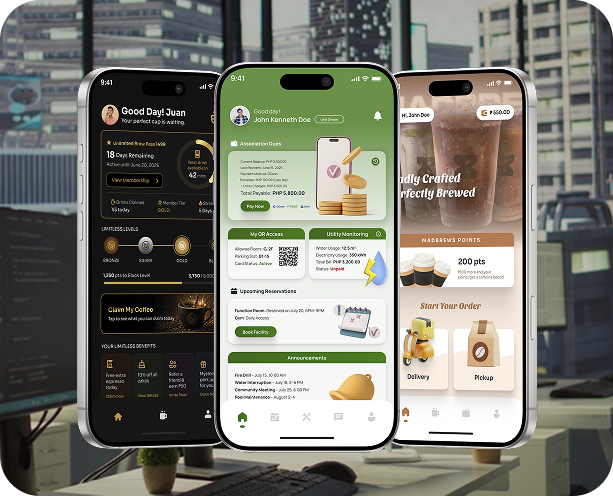
Learn moreA new app is on the way for Madbrews! Built by RVE App Maker, this app is designed to make coffee ordering faster, easier, and more rewarding.
Learn moreDiscover how RVE App Maker helps businesses grow with tailor-made mobile and web apps — designed for efficiency, engagement, and results.
Learn more


