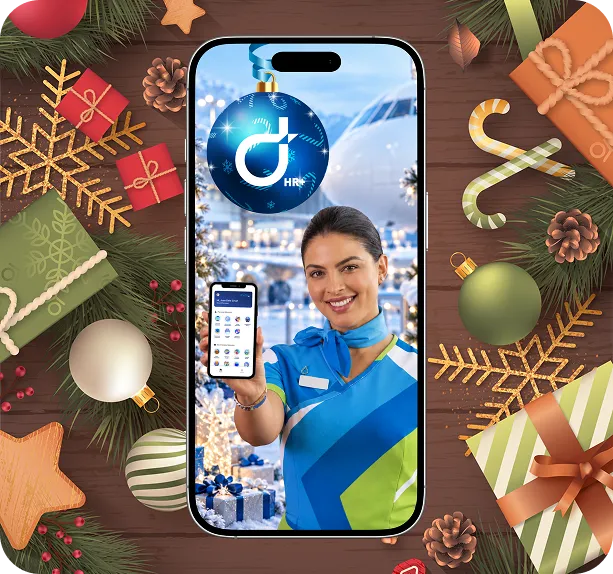
Enterprise mobile applications need to remain useful long after the first release. They also need to adapt when an organization wants to refresh the experience presented to its employees. For Christmas 2026, Dnata HR has received a festive visual theme for its Android and iOS applications. This seasonal update provides a timely example of how a deployed enterprise application can receive a design refresh while retaining its day-to-day business purpose.
Dnata HR is not simply a decorative app. It supports employee information access and practical HR transactions, including requests that require management approval. That combination makes it a relevant project example for Philippine businesses exploring custom enterprise mobile application development. The Christmas update is the news angle; the more enduring story is the ability of tailored software to support an organization’s own processes.
A generic mobile app may offer a standard set of screens, but enterprises often have distinct procedures for schedules, attendance and authorization. Custom development can be used to reflect those requirements in an employee-facing experience. The business objective is not merely to put a form on a phone. It is to make the correct request available to the correct user and connect it with the appropriate decision-maker.
Dnata HR illustrates this through employee self-service and immediate-head approval workflows. Employees can initiate several types of HR transactions through mobile access. Supervisory review remains part of the process, which is essential when a request affects payroll-related records, staffing or attendance. Any technical details about the application’s back-end integration should be confirmed before publication; the observable business value is the supported workflow.
Overtime is a common example of a business transaction that benefits from a defined approval
process. Through Dnata HR, employees can file overtime requests using the mobile application.
The immediate head reviews the request according to company requirements. This is more specific
than simply displaying overtime information: the app supports the initiation of a transaction
that needs authorization.
For a company planning a similar system, the design questions include who may request overtime,
what information the employee needs to provide and what approval authority applies. Those
questions should be answered in requirements gathering, not assumed by the development team. A
custom solution can then be structured around the approved workflow.
Dnata HR also supports leave filing and access to leave information, including balances. On a
mobile device, employees can consult relevant information and submit a request without needing
to locate a desktop workstation. The immediate head’s approval remains part of the process.
A useful enterprise design distinguishes between the act of submitting a request and the
decision to approve it. That distinction helps set expectations for employees and supervisors.
Businesses commissioning custom HR applications should define how leave types, eligibility and
approval rules relate to their own policies before implementation.
An official business request records a work-related activity that may take an employee outside
the normal workplace. Dnata HR allows this type of request to be filed through the mobile
application and reviewed by the immediate head. It is another example of software reflecting a
real operational process rather than a generic contact form.
For distributed teams, a mobile filing option can be particularly relevant. Employees may need
to initiate requests while moving between work locations. The system should still reflect the
company’s approval requirements and avoid treating an unapproved submission as a final
authorization.
Attendance management involves exceptions as well as routine records. An employee may forget to
time in or time out, creating an entry that needs explanation and review. Dnata HR supports
filing a correction request for these situations, with immediate-head approval. This is a
valuable capability to highlight because it addresses a real-world exception that many
organizations encounter.
From a software design perspective, a correction request should be differentiated from direct,
uncontrolled editing of time records. The employee requests a correction; the authorized
reviewer evaluates it. The exact audit and validation mechanisms of Dnata HR should not be
asserted without technical confirmation, but the request-and-approval model itself is an
important business requirement.
A change of shift can affect more than one person’s timetable. It may influence staffing
coverage, handovers and operational planning. Dnata HR enables employees to file shift-change
requests and obtain approval from their immediate head. The application therefore supports a
workflow where the employee can propose a change but the organization retains management
oversight.
When building a similar enterprise application, the developer and client should clarify who may
request a shift change, what information is required and when an approved change becomes
effective. Such decisions are part of translating business operations into application behavior.
In addition to request filing, Dnata HR gives employees access to information such as personal
details, attendance information, payslips, payroll deductions and leave balances. This mix of
information and action is a common characteristic of useful enterprise employee applications.
People can review a record and, when necessary, initiate a related HR request from a familiar
mobile environment.
For businesses considering a mobile solution, it is worth distinguishing read-only features from
transactions that change a workflow or require approval. The latter often involve more extensive
requirements discussions, testing and user training. A clear feature inventory helps avoid
confusion about what the finished application is expected to do.
Dnata HR is available on Google Play for Android and on the Apple App Store for iOS. Supporting
both platforms makes the application accessible to employees using different smartphone
ecosystems. Each platform has its own distribution requirements, review process and
operating-system considerations.
Businesses should plan for more than the initial release. Mobile operating systems evolve, store
policies change and new devices are introduced. Enterprise applications therefore need an
ongoing maintenance approach that addresses compatibility, usability and relevant security
requirements. The specific tools and architecture used for Dnata HR have not been detailed here,
so this article does not make unsupported claims about its programming language or
cross-platform framework.
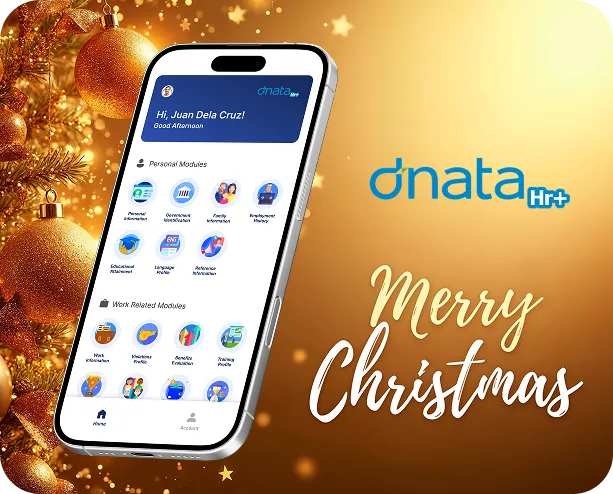
The festive design update shows how an existing enterprise application can be refreshed
for a seasonal initiative. A Christmas theme can give an internal business tool a more
engaging look without changing its core function. For employees, the application remains
a way to access HR information and file requests; for the organization, it becomes an
additional place where a seasonal visual identity can appear.
This is an example of post-launch customization, not evidence that the update introduced
new approval features. Separating those two points makes the case study more accurate.
The established HR functions demonstrate business utility, while the Christmas theme
demonstrates the flexibility to update the mobile interface over time.
Custom software projects begin with understanding how a business actually works. For a mobile HR
application, the relevant questions include employee roles, the kinds of requests allowed,
approval authority, exception handling, information access and device support. Requirements
should be documented and reviewed before implementation.
Testing should consider normal requests as well as exceptions: a missed attendance punch, an
overtime filing, a leave request or a proposed shift change. The goal is to ensure that the
mobile experience communicates the correct action and does not bypass the organization’s
approval rules. After deployment, feedback and maintenance can guide refinements, including
interface improvements and seasonal design updates.
RVE App Maker has 15 years of experience in custom software and enterprise application
development. Its work covers business applications, Android and iOS solutions, workflow
automation and ongoing software customization. The company maintains ISO 9001:2015 and ISO
27001:2022 certifications and has received Global Banking & Finance Awards recognition for IT
solutions and software development innovation.
For Philippine organizations evaluating development partners, these credentials can be
considered alongside project experience, requirements discipline, support arrangements and the
ability to communicate clearly about scope. The right provider should understand the business
process before proposing a technical implementation. Dnata HR offers a concrete discussion point
for employee self-service, mobile workflows and application lifecycle support.
The Dnata HR Christmas 2026 theme is available on Android and iOS. Visit the official store
pages to view the application. For organizations exploring an employee mobile app, enterprise
workflow solution or custom business application, RVE App Maker provides software development
services focused on business requirements.
Visit https://www.rveappmaker.com
for information about custom software and mobile application
development in the Philippines. From Concept to Implementation.
What business workflows does Dnata HR support?
The application supports filing overtime, leave, official business, attendance correction and shift-change requests, with immediate-head approval.
Does the Christmas update add those workflows?
No such claim is made. The Christmas 2026 update is presented as a seasonal visual refresh to an application with established HR functionality.
Why support both Android and iOS?
Availability on both platforms allows organizations to serve employees who use different smartphone operating systems.
GOOGLE PLAY — ANDROID
https://play.google.com/store/apps/details?id=com.dnatahr2024.phAPPLE APP STORE — iOS
https://apps.apple.com/ph/app/dnata-hr/id6736918155We helped HROnlinePlus revamp their website and app with a sleek design and smarter features — boosting performance and user experience for HR teams and employees.
Learn moreA new app is on the way for Madbrews! Built by RVE App Maker, this app is designed to make coffee ordering faster, easier, and more rewarding.
Learn moreDiscover how RVE App Maker helps businesses grow with tailor-made mobile and web apps — designed for efficiency, engagement, and results.
Learn more


